
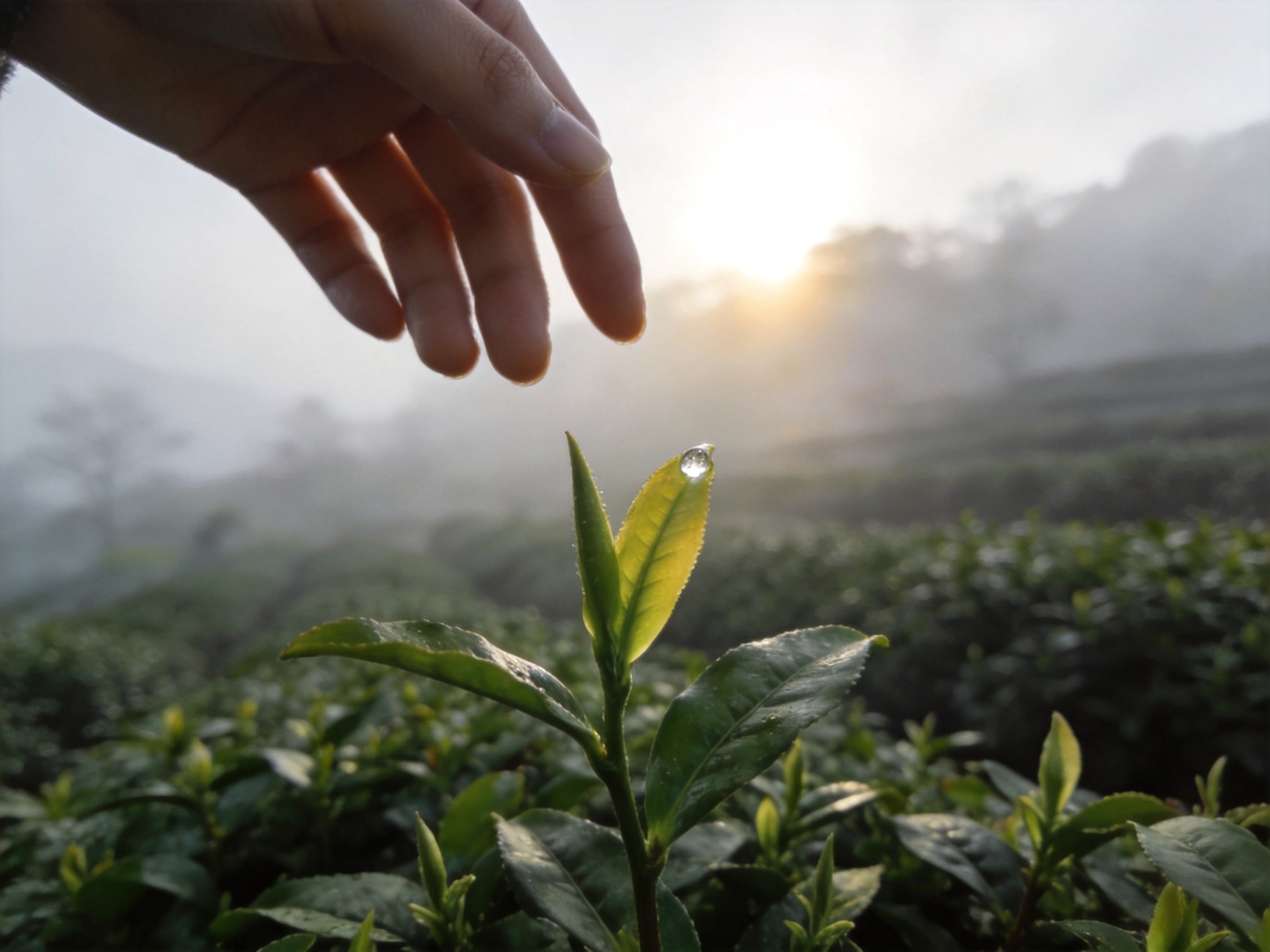
Spring has never been only a date on the calendar.
For a cup of tea, it is a span of time both short and precious.
After winter, the land slowly warms. Temperature, rain, sunlight and the change between day and night let the tea trees, quiet for a season, grow again.
New buds appear. People begin to wait.
Waiting for the leaves to grow, and waiting for the moment that is just right.
When people speak of spring tea, they think first of earliness. But what truly matters is not simply the earlier the better.
Whether a leaf has reached the state fit for picking, whether the weather suits, whether the tenderness suits, whether what is picked can move into making without delay — every step changes the final cup.
The true choice begins with knowing when not to pick.
This is where tea differs from industrial products. Machines can run to a plan; a season will not.
Nature will not arrive a day early for a production schedule, nor stay an extra week for the market.
So what makes a spring tea truly precious is not only its tenderness, but that it comes from a judgement made between person and season.
Picked too early, it is not yet ready. Past its moment, it may become something else.
True waiting is not waiting longer; it is knowing when is just right.
When the young leaves leave the tree, time enters its next journey.
Withering, making, temperature, the judgement of the hand — every step answers the same question:
How to keep this spring, as whole as possible, in the tea?
At last, hot water falls. The leaves open in white porcelain.
The rain, the mist, the sunlight and the time that once belonged to the mountains become the clear colour and scent in the cup.
What we drink is never only a leaf; it is also the trace a season has left.
Some flavours come only once a year.
So we are willing to wait.
For spring, and for a cup of tea, to happen at the right time.
MULAN SEASONAL
DISCOVER THE SEASON